

Identify Anonymous Visitors
Prevent Abuse
Protect Your Revenue

Anonymous visitor identification under deep masking, abuse pattern detection, and traffic quality assessment in real time with a detailed risk score for every visitor.

Visitor identification

Persistent identification of returning visitors

Anonymity detection

VPN, proxy, TOR, and anti-detect browsers

Abuse pattern detection

Multi-accounting, fake accounts, and ban evasion

Explainable Risk Score

Clear reasons and risk level for every visit

Traffic quality

Separate real visitors from anonymous traffic

Anonymous traffic costs more than you think

Up to 30% of traffic on digital platforms comes from visitors using anonymization tools. Most of it is invisible to standard analytics.

Fake accounts drain free trials

Repeated signups exploit free trial and freemium access. Free trial abuse distorts conversion data and wastes resources.

Bonus abuse and referral fraud

Same visitors claim bonuses, promo rewards, and referral payouts repeatedly under different identities at scale.

Marketing spend on phantom traffic

Acquisition budget goes to anonymous visitors. CAC, LTV, and attribution are calculated on distorted data.

Real users face extra friction

Blunt rules meant to stop abuse create false declines, CAPTCHAs, and unnecessary checks for legitimate visitors.

Enterprise tools, enterprise prices

Enterprise fraud prevention platforms charge enterprise prices - leaving most teams without anonymous visitor detection.

Unreliable analytics

Anonymous visitors pollute data. Conversion rates, engagement metrics, and cohort analysis become meaningless.

Key Features

Everything you need to identify anonymous visitors and prevent abuse

Persistent Visitor Identification

Identify returning visitors across sessions and accounts - one stable ID that persists through IP rotation, cookie clearing, and incognito mode.

Deep Anonymity Detection

Real-time mismatch analysis across 70+ device, operating system, browser, network, and IP signals to detect anti-detect browsers, environment spoofing, and tampered devices.

IP Address and Network Intelligence

IP reputation, geolocation, and timezone analysis. Detection of anonymized connections and location spoofing at the network connection level with up to 99% accuracy.

Abuse Detection for Fraud Prevention

Linking visitors, devices, and accounts into an identity graph to detect abuse activity based on ready-made patterns with assessment of scale and risk level.

Explainable and Detailed Real-Time Risk Score

Real-time risk score assignment to every visitor with overall traffic risk level indication, scoring reasons, and contributing factors for informed decision-making.

API and Webhooks

Transmission of detailed visitor data, risk score, and scoring signals via API and Webhooks in real time for automation of fraud prevention rules and protection scenarios.

Enterprise-Grade without Enterprise Cost

The same level of visitor identification and abuse detection used by platforms like Google and X / Twitter with fast integration and transparent per-request pricing. No "Contact Sales."
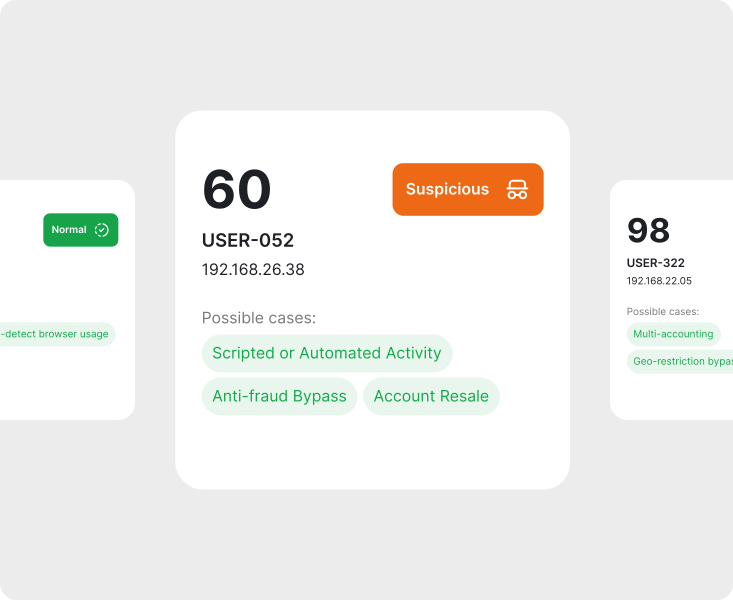
Key features dashboard preview

What ShieldLabs detects in real time

Anonymization methods, masking techniques, and abuse activity - detected through device intelligence and network analysis across multiple layers, in real time.

VPN

Detection of connections through VPN providers and rotating IP infrastructure.

Proxy

Detection of connections through proxy servers of various types.

TOR

Detection of connections through the TOR network.

Privacy Relay

Detection of connections through Privacy Relay services.

Anti-detect browsers

Detection of browsers designed for masking.

Data center and hosting infrastructure

Detection of connections originating from data centers, cloud providers, and VPS infrastructure.

Environment spoofing

Detection of attempts to hide or alter real device, OS, and browser parameters.

Abuse activity

Detection of abuse activity indicating multi-accounting, account sharing, and signs of account compromise.

IP Reputation

Detection of IP addresses associated with known abuse, spam, and fraudulent activity.

Location Spoofing

Detection of timezone and geolocation mismatches between browser and IP indicating masked or spoofed visitor location.

Use Cases

Where anonymous visitor identification prevents abuse

Account Takeover

Detect when an account is accessed from an unrecognized device or suspicious connection, indicating account takeover. Prevent unauthorized access and protect user accounts.

Account Registrations

Detect when one person creates multiple accounts to commit multi-accounting abuse. Prevent fake account creation and maintain a real, trustworthy user base.

Free Trial and Freemium

Detect returning visitors who create new accounts to commit free trial abuse. Prevent repeated access and protect conversion to paid plans.

Subscriptions and Paid Access

Detect activity associated with subscription abuse and unauthorized access. Protect recurring revenue and prevent subscription fraud.

Account Sharing

Detect when one account is used by multiple users, indicating account sharing. Prevent revenue loss and protect subscription value.

Plan and Usage Limit Bypass

Detect when users create fake accounts to bypass plan limits and commit usage abuse. Prevent abuse of product access and ensure fair usage.

Ban and Restriction Evasion

Detect when blocked users return under a new identity to evade enforcement. Prevent ban evasion and ensure platform integrity.

Referral Programs

Detect when users create accounts to commit referral fraud. Prevent referral abuse and protect acquisition efficiency.

Bonuses and Promotional Campaigns

Detect when users claim bonuses and promotional offers to commit bonus abuse or promo abuse. Prevent promotional fraud and protect marketing ROI.

Giveaways and Contests

Detect when users attempt to claim giveaway rewards and contest prizes under multiple identities to commit giveaway abuse. Prevent giveaway fraud and protect campaign fairness.

Traffic Quality and Acquisition

Detect anonymous traffic and traffic abuse. Prevent wasted acquisition spend and improve traffic quality with real-time anonymous visitor identification.

Cryptocurrency / Web3

Detect sybil abuse and farming activity in crypto airdrops and reward campaigns. Protect fair reward distribution and prevent farming abuse.

Voting and Ratings

Detect when users submit multiple votes or ratings, indicating voting fraud. Prevent manipulation and ensure trustworthy outcomes.

Surveys and Data Collection

Detect when users submit multiple responses to commit survey fraud. Prevent data manipulation and protect analytics integrity.

Coupon and Discount Abuse

Detect when users create multiple accounts to reuse discount codes and first-time-buyer offers. Prevent coupon fraud and protect promotional spend.

How it works

From integration to real-time risk assessment
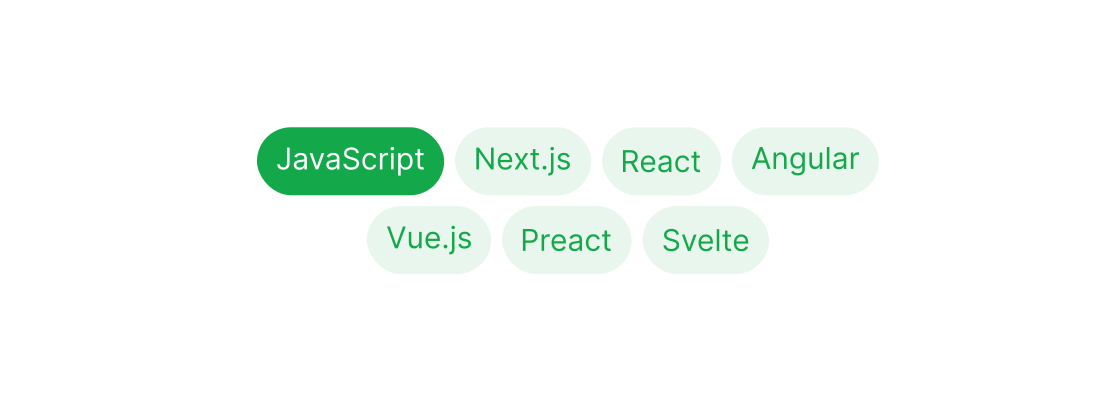
Fast Integration - Go Live in 5 Minutes

Fast Integration - Go Live in 5 Minutes

Add a code snippet to your site. The system generates a persistent visitor ID for every visit and starts traffic analysis and anonymous visitor identification in real time.
Real-Time Risk Score Calculation

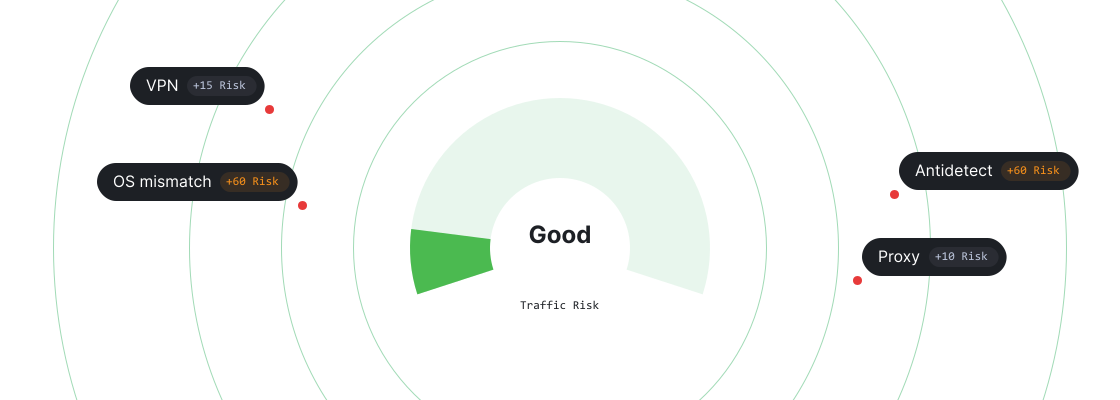
Real-Time Risk Score Calculation

Anonymity signals and cross-layer mismatches produce an explainable risk score for every visitor and an overall traffic anonymity level.
Abuse Pattern Detection

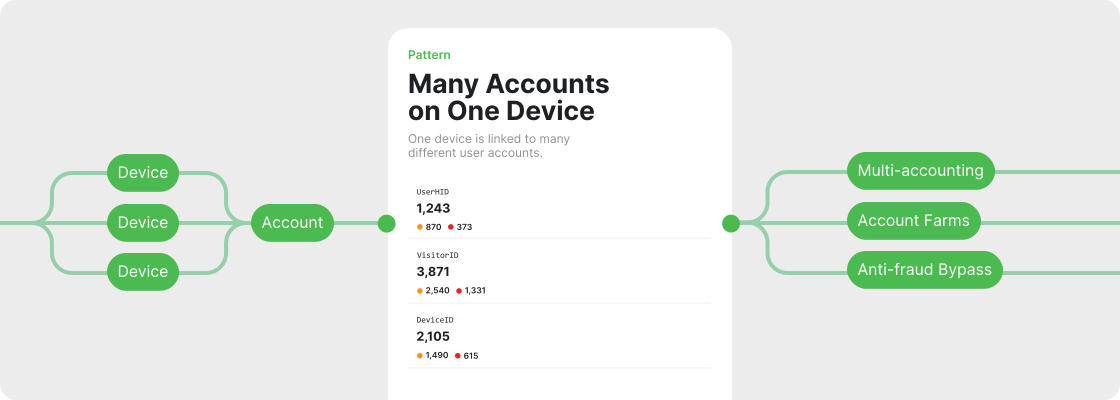
Abuse Pattern Detection

The system builds an identity graph linking visitors, devices, and accounts over time. Ready-made abuse patterns detect suspicious connections and activity with assessment of scale and risk level for each.
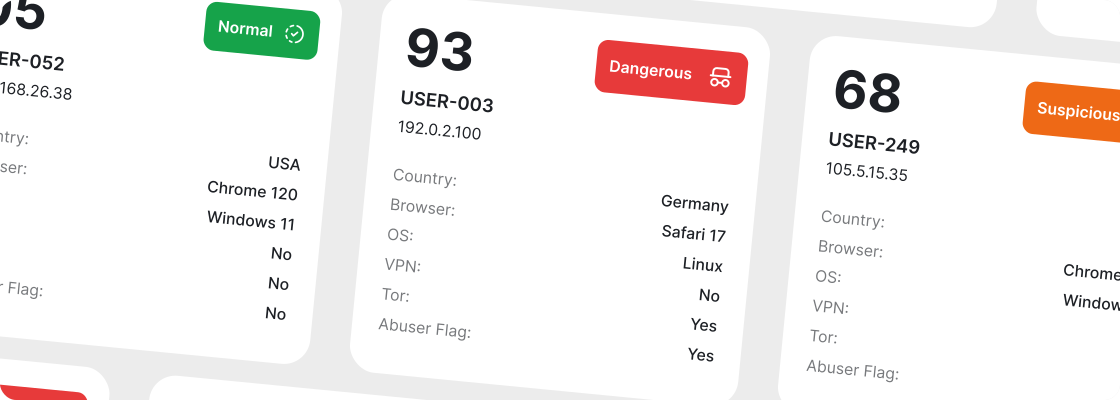
Explainable Details & Action

Explainable Details & Action

Risk Score, scoring reasons, and detailed visitor data available in the real-time dashboard or via API and Webhooks. Build your own fraud prevention rules, automate workflows, and make informed decisions.

Pricing

Enterprise-grade anonymous visitor identification at a fraction of the enterprise cost. Start free, pay per request, no “Contact Sales.”

  • Free

    $0

    one time 5,000 requests

    For initial traffic quality check and anonymous visitor identification

    Includes:

    • Visitor identification
    • Anonymous detection
    • Traffic & Visitor Risk Scoring
    • Device Intelligence
    • IP & Location Intelligence
    • OS & Network Intelligence
    • Mismatch detection
    • Cross-entity correlation
    • Ready-made abuse patterns
    • Pattern-based identity risk scoring
    • Real-time dashboard
    • Data export
    • API access
    • Webhooks
    • Standard support
  • Starter

    $99/ month

    25,000 requests

    $3.96 per 1,000 requests

    For ongoing anonymous visitor identification and traffic quality monitoring.

    Includes:

    • Visitor identification
    • Anonymous detection
    • Traffic & Visitor Risk Scoring
    • Device Intelligence
    • IP & Location Intelligence
    • OS & Network Intelligence
    • Mismatch detection
    • Cross-entity correlation
    • Ready-made abuse patterns
    • Pattern-based identity risk scoring
    • Real-time dashboard
    • Data export
    • API access
    • Webhooks
    • Standard support
  • Growth

    Most Popular
    $399/ month

    150,000 requests

    $2.66 per 1,000 requests

    For abuse detection and fraud prevention at scale.

    Includes:

    • Visitor identification
    • Anonymous detection
    • Traffic & Visitor Risk Scoring
    • Device Intelligence
    • IP & Location Intelligence
    • OS & Network Intelligence
    • Mismatch detection
    • Cross-entity correlation
    • Ready-made abuse patterns
    • Pattern-based identity risk scoring
    • Real-time dashboard
    • Data export
    • API access
    • Webhooks
    • Standard support
  • Scale

    $999/ month

    500,000 requests

    $1.99 per 1,000 requests

    For high-volume platforms. Enterprise-grade anonymous visitor identification optimized for high-traffic and regulated industries.

    Includes:

    • Visitor identification
    • Anonymous detection
    • Traffic & Visitor Risk Scoring
    • Device Intelligence
    • IP & Location Intelligence
    • OS & Network Intelligence
    • Mismatch detection
    • Cross-entity correlation
    • Ready-made abuse patterns
    • Pattern-based identity risk scoring
    • Real-time dashboard
    • Data export
    • API access
    • Webhooks
    • 99.9% SLA
    • Priority support

Compare all features

Full breakdown of capabilities across plans

Frequently asked questions

What is ShieldLabs?
ShieldLabs is an anonymous visitor identification and traffic quality platform. It analyzes device, browser, IP, and network signals, detecting mismatches between them to identify anonymous visitors and assign a real-time explainable risk score to every visit, as well as detect abuse patterns across your traffic.
What is ShieldLabs used for?
ShieldLabs is used to identify anonymous visitors, assess traffic quality, and detect abuse activity such as multi-accounting, fake account creation, account takeover, free trial abuse, bonus abuse, ban evasion, referral fraud, account sharing, coupon abuse, subscription abuse, giveaway fraud, voting manipulation, and survey fraud.
Who is ShieldLabs for?
ShieldLabs is best for startups, small-to-mid-sized businesses, and digital platforms with medium to high traffic volume that need a cost-effective anonymous visitor identification solution. Built for product, fraud, and growth teams at SaaS platforms, fintech, iGaming, e-commerce, Web3, media and streaming, travel, and technology platforms - any business dealing with anonymous traffic and abuse.
How accurate is ShieldLabs?
ShieldLabs detects anonymized connections and environment spoofing with up to 99% accuracy through multi-layer analysis.
How is ShieldLabs different from traditional abuse prevention platforms?
ShieldLabs delivers the same level of visitor identification and abuse detection used by platforms like Google and X / Twitter — with transparent per-request pricing, self-serve integration in 5 minutes, and an explainable risk score. No "Contact Sales," no enterprise contracts.
Can a visitor be recognized when IP changes?
Yes. ShieldLabs generates a persistent visitor ID. This identifier remains stable across sessions even when the visitor changes IP, clears cookies, switches to incognito mode, or creates a new account.
What is a persistent visitor ID?
A persistent visitor ID is a stable identifier assigned to each visitor. Unlike cookies or IP addresses, it survives IP rotation, cookie clearing, incognito mode, and account changes - allowing real-time recognition of returning visitors regardless of how they try to hide.
What is browser fingerprinting?
Browser fingerprinting is a technique for identifying website visitors by collecting unique browser signals such as browser version, preferred language, screen resolution, installed fonts, and graphics rendering. These signals are combined to generate a unique identifier that recognizes the visitor across sessions — even without cookies.
What is device fingerprinting?
Device fingerprinting identifies a visitor based on hardware and operating system signals such as device type, OS version, memory, processor, and screen parameters. Combined with browser fingerprinting, it produces a more stable and accurate identification.
How does device fingerprinting differ from browser fingerprinting?
Browser fingerprinting collects signals from the browser — version, language, plugins, screen resolution. Device fingerprinting collects signals from the hardware and operating system — device type, OS, memory, processor. ShieldLabs combines both to generate a persistent visitor ID with higher accuracy than either method alone.
Does ShieldLabs do device fingerprinting or browser fingerprinting?
Both. ShieldLabs analyzes 70+ signals across device, operating system, and browser to generate a persistent visitor ID. It then cross-validates these signals against network and IP data to detect mismatches and expose anonymous visitors.
Is browser fingerprinting safe?
For businesses, browser fingerprinting is used to identify anonymous visitors and distinguish between legitimate users and potentially fraudulent ones. ShieldLabs does not track users across sites and does not collect personally identifiable information during the fingerprinting process. For visitors, the process is invisible and adds no friction to their experience.
Can ShieldLabs detect a visitor in incognito mode or on a VPN?
Yes. Device and browser fingerprinting signals remain consistent even in incognito mode. VPN connections are detected through IP intelligence and cross-layer mismatch analysis. ShieldLabs identifies the visitor in both cases.
What can ShieldLabs detect?
ShieldLabs detects VPN, proxy, TOR, iCloud Private Relay, anti-detect browsers, tampered browsers, anti-fingerprint tools, data center and hosting infrastructure, environment spoofing, device tampering, location spoofing, timezone mismatches, and abuse activity. All detection works in real time.
Does ShieldLabs detect anti-detect browsers?
Yes. Anti-detect browsers are designed to mask device fingerprints and rotate identities. ShieldLabs detects them through cross-layer mismatch analysis, identifying the difference between what the browser claims and what is actually detected.
Can ShieldLabs detect fake accounts and multi-accounting?
Yes. The system builds an identity graph linking visitors, devices, and accounts across sessions. When the same person creates multiple accounts — even using different IPs, browsers, or anti-detect tools — the system connects them through shared device and network characteristics.
Can ShieldLabs detect account takeover?
Yes. When an account is accessed from an unrecognized device, suspicious connection, or unusual location, the system flags it as a potential account takeover.
Can ShieldLabs detect location spoofing?
Yes. The system detects timezone and geolocation mismatches between what the browser reports and what the IP and network reveal — indicating masked or spoofed visitor location.
Does ShieldLabs detect account sharing?
Yes. When multiple devices, locations, and network signatures access the same account, the system flags it as potential account sharing — helping protect subscription value and enforce per-user access.
What is Risk Score?
Risk Score is a numerical assessment of explainable risk for every visit. It is calculated from anonymity indicators, cross-layer mismatches, and network signals. A high score indicates an increased probability of an anonymous or masked visit. Every score includes clear reasons for every contributing factor.
How is Risk Score calculated?
Each detected signal contributes to the final score - VPN detection, proxy connection, OS mismatch between browser and network, timezone conflict, data center IP, and more. Risk score reflects the cumulative risk level and explains each factor.
What is traffic risk level?
Traffic risk level is an overall assessment of anonymity across all your traffic. It shows what percentage of visitors are clean, low risk, medium risk, or high risk - giving you visibility into overall traffic quality.
Does ShieldLabs automatically block users?
No. ShieldLabs provides risk score, scoring reasons, and detailed visitor data. The blocking decision is made by you - either manually or through automated rules you configure.
What is an identity graph?
An identity graph is a map of connections between visitors, devices, and accounts. ShieldLabs builds this graph automatically by linking persistent visitor IDs, device fingerprints, and network signals across all sessions — revealing which accounts are connected and the risk level of each connection.
What are abuse patterns?
Abuse patterns are ready-made detection rules that identify suspicious connections between visitors, devices, and accounts — such as many accounts on one device, changing IDs on one account, or many devices on one account. Each pattern flags potential multi-accounting, account sharing, ban evasion, or coordinated abuse.
What is traffic quality?
Traffic quality is a measure of how much of your traffic comes from real, identifiable visitors versus anonymous, masked, or suspicious traffic. ShieldLabs assigns a risk level to your overall traffic and a risk score to every visitor.
How long does integration take?
Integration takes approximately 5 minutes. Add a code snippet to your site, and the system immediately begins anonymous visitor identification and real-time traffic analysis.
Which frameworks are supported?
ShieldLabs supports JavaScript, Next.js, React, Angular, Vue.js, Preact, and Svelte.
Does ShieldLabs provide API and Webhooks?
Yes. Risk score, visitor IDs, and detailed detection signals are available via API and Webhooks in real time for automation of fraud prevention rules and protection scenarios.
Does ShieldLabs affect real users?
No. The system operates in the background and does not require any additional actions from visitors. No CAPTCHAs, no challenges, no friction.
How does pricing work?
ShieldLabs offers transparent per-request pricing with a free tier. Start free, scale as you grow. No enterprise contracts, no "Contact Sales."
Is there a free plan?
Yes. The free plan includes 5,000 requests for initial traffic quality check and anonymous visitor identification.

Stop invisible abuse. Start identifying anonymous visitors in real time.

Free tier included. Integration takes 5 minutes. No credit card required.

Start Free